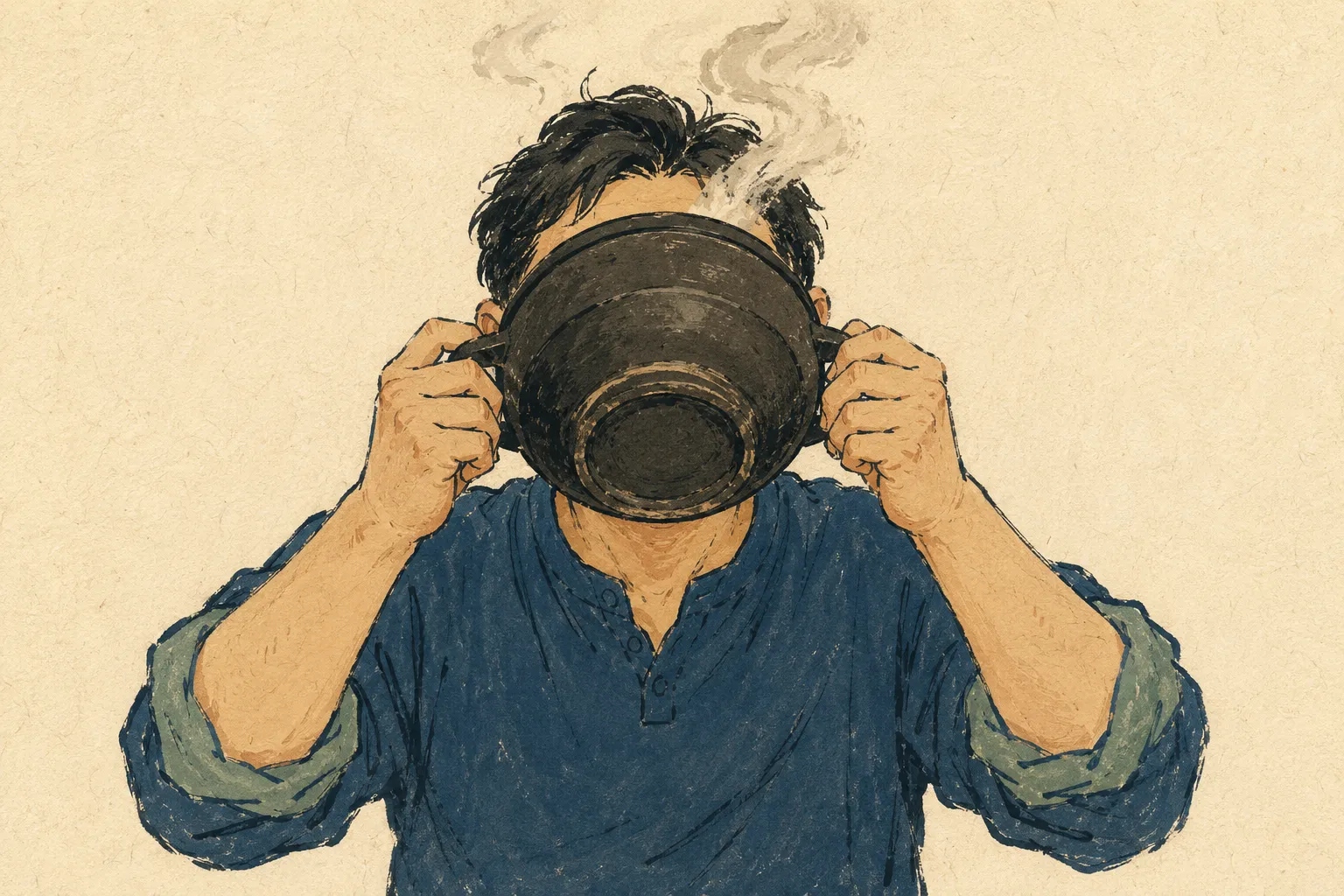
Watch any Korean drama and you’ll catch a gukbap scene sooner or later. From there it’s not hard to guess: this is some kind of soul food. Fair, as far as it goes. What dramas don’t show is the rest of the table.
Walk into an actual gukbap restaurant and your bowl arrives with company — a row of side dishes, a few jars of mystery powders, and at least one container of fermented something. First-timers stare. What goes where? In what order? How much of each?
If you’re lucky enough to have a Korean friend at the table, they’ll happily walk you through every step — explaining Korean things to non-Koreans is one of their favorite pastimes. If you’re with friends who don’t know 국밥 either, or going alone, this guide is for you.
When the soup is the meal
Gukbap is two words: 국 (soup) plus 밥 (rice) . “Soup-rice.” Exactly what it sounds like.
But that translation hides the trick. Almost every Korean meal already has soup and rice on the table — bibimbap with 미역국 (seaweed soup) , bulgogi with 된장국 (soybean paste soup) , school lunches, hospital trays. None of those are called gukbap.
The difference is what the soup does. In a normal Korean meal, the soup is support — a warm liquid running alongside the rice, helping it down, washing the palate between bites of 반찬 (side dishes) . It’s not the main event.
In gukbap, the soup is the main event. Hours of bone broth or stew, served as a meal in itself. The rice is in there too — same bowl or beside it, depending on the place — but the bowl exists to deliver the soup. No banchan necessary. No separate protein. One bowl, complete on its own.
The gukbap universe
There isn’t one gukbap. There are dozens, and Koreans clock the regional identity of each one immediately:
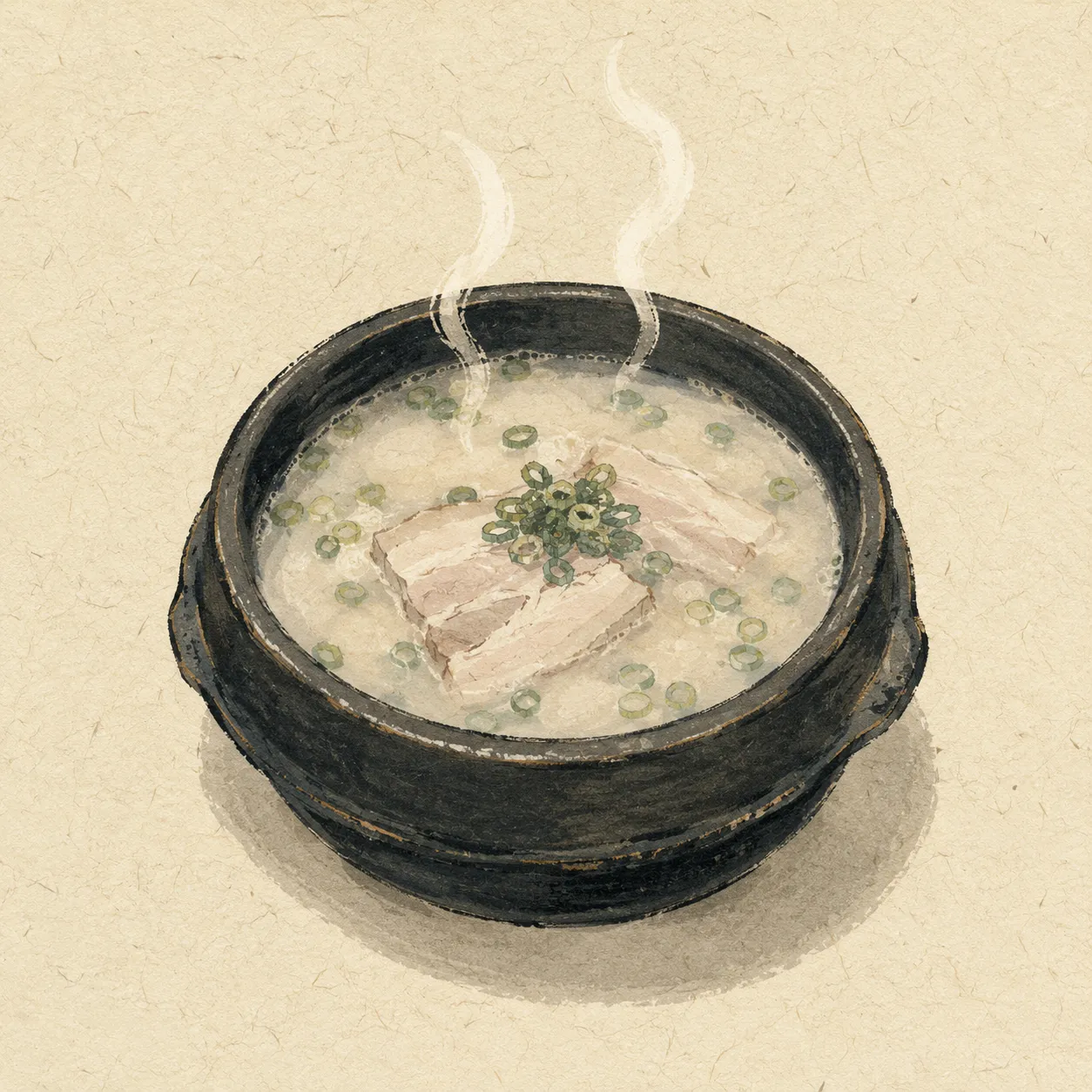
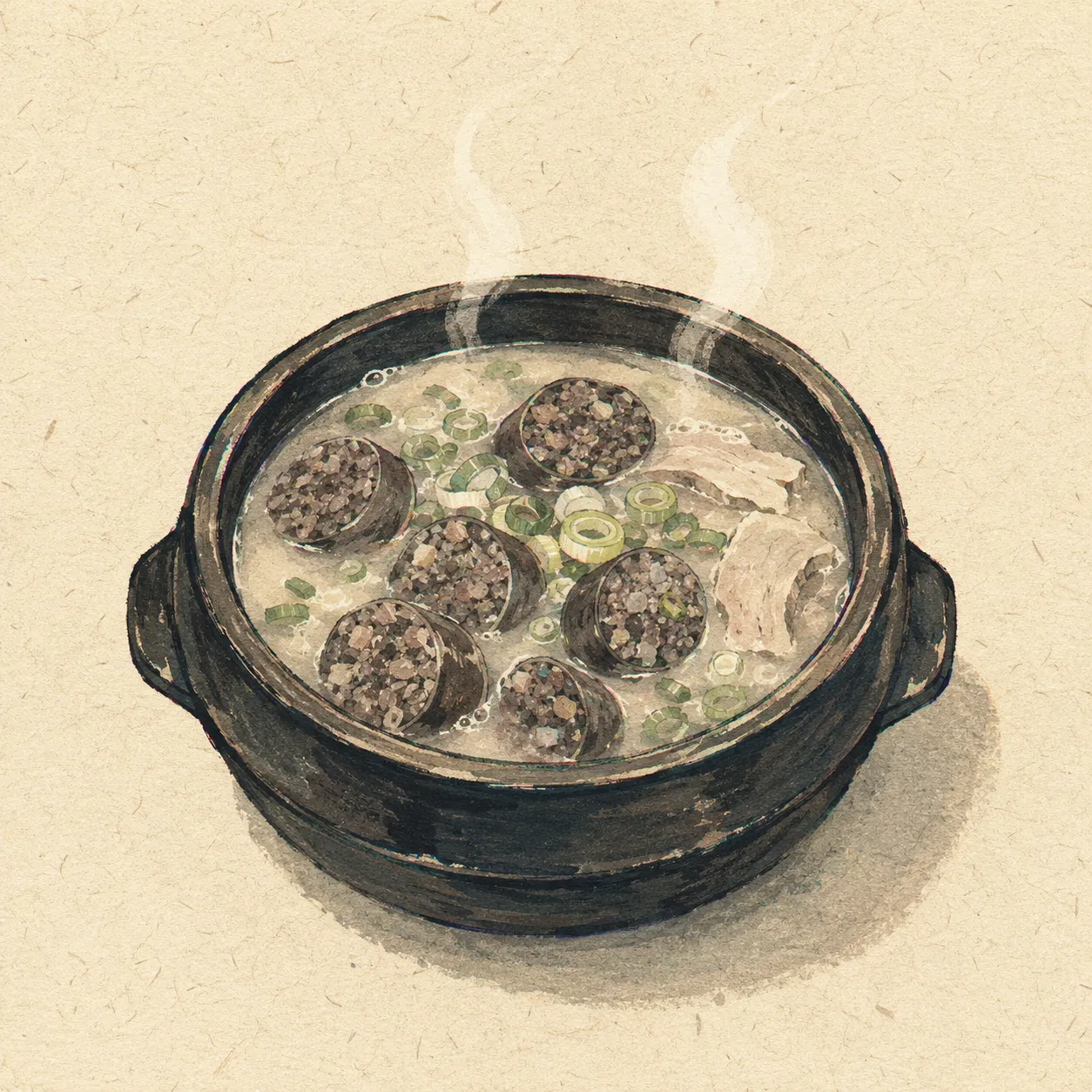
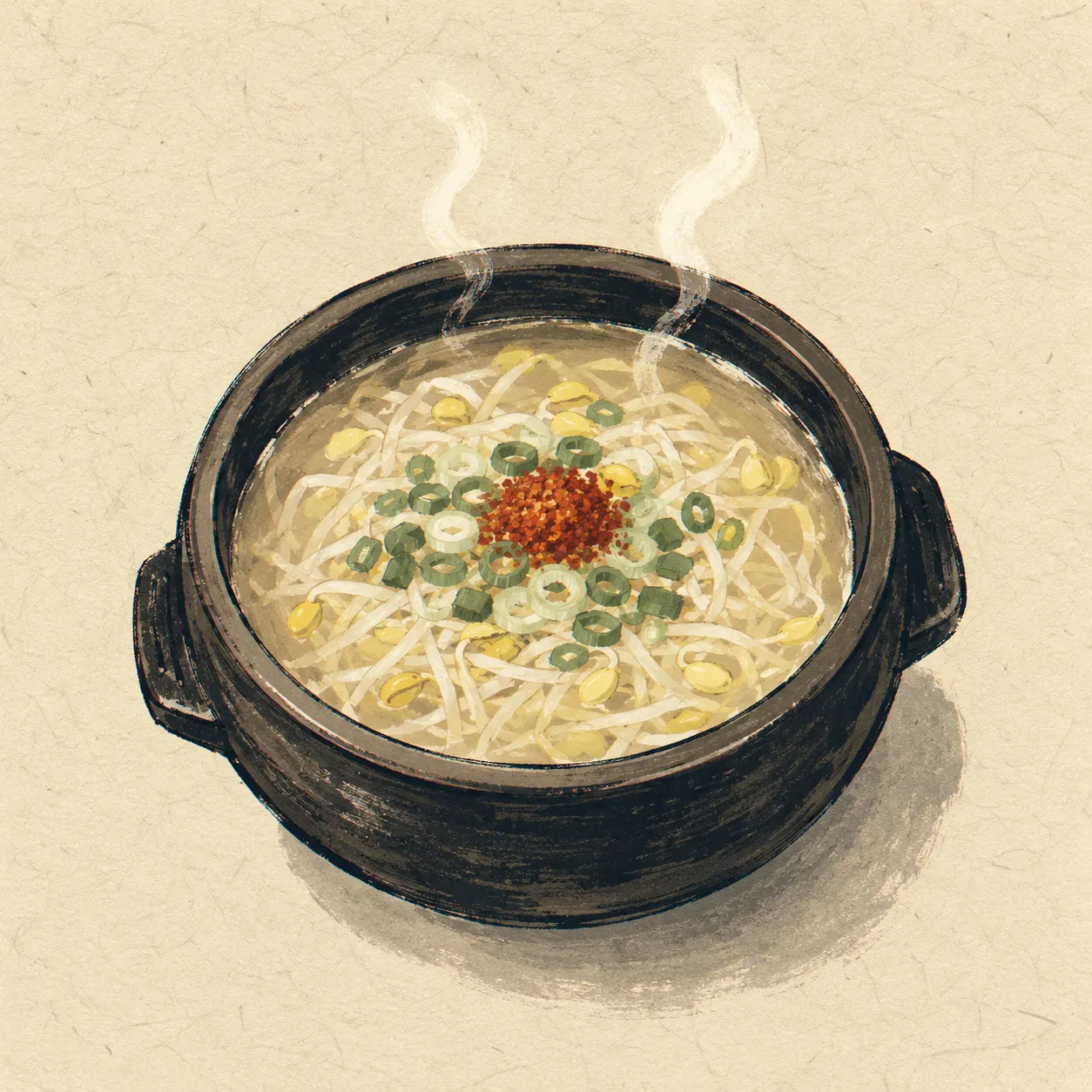
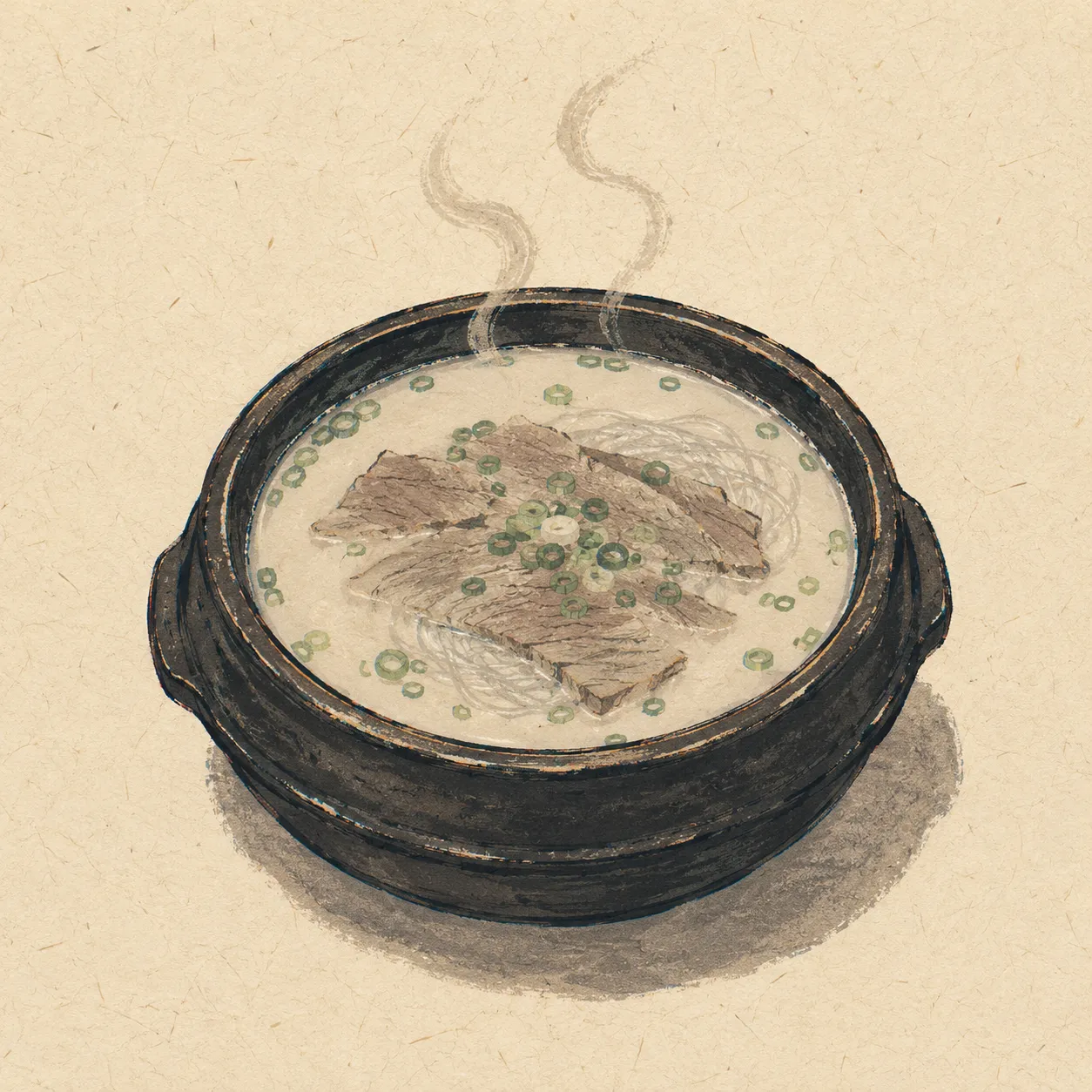
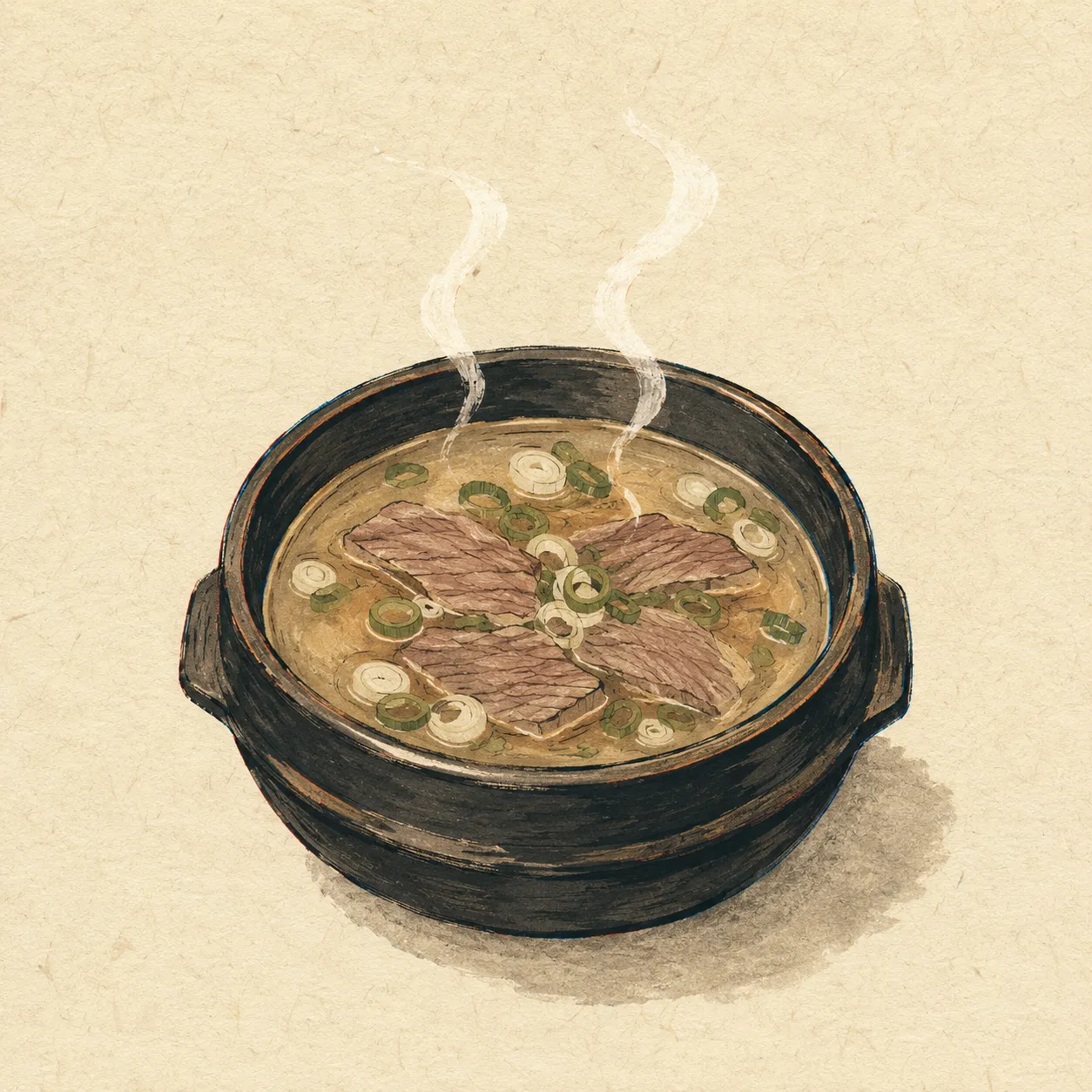
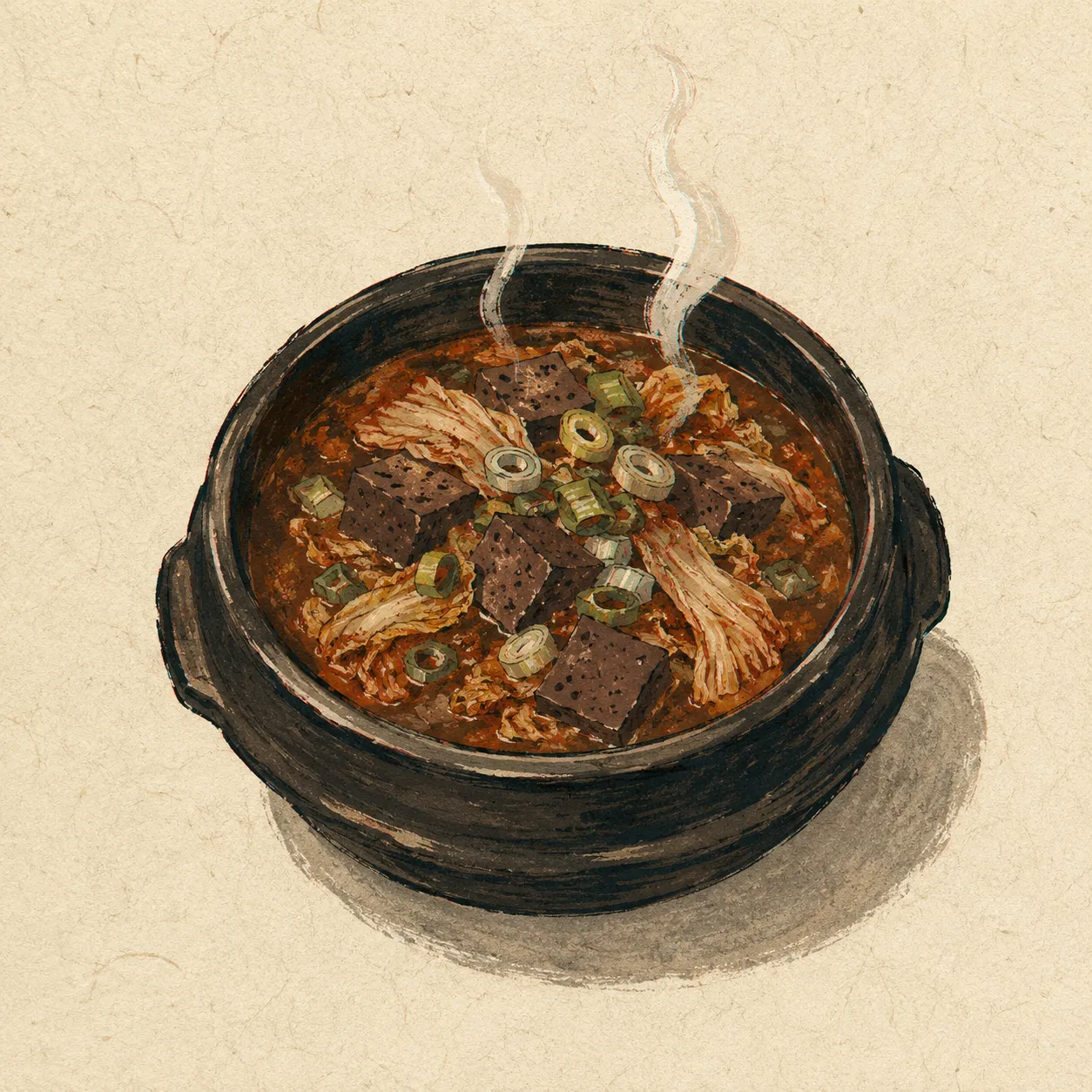
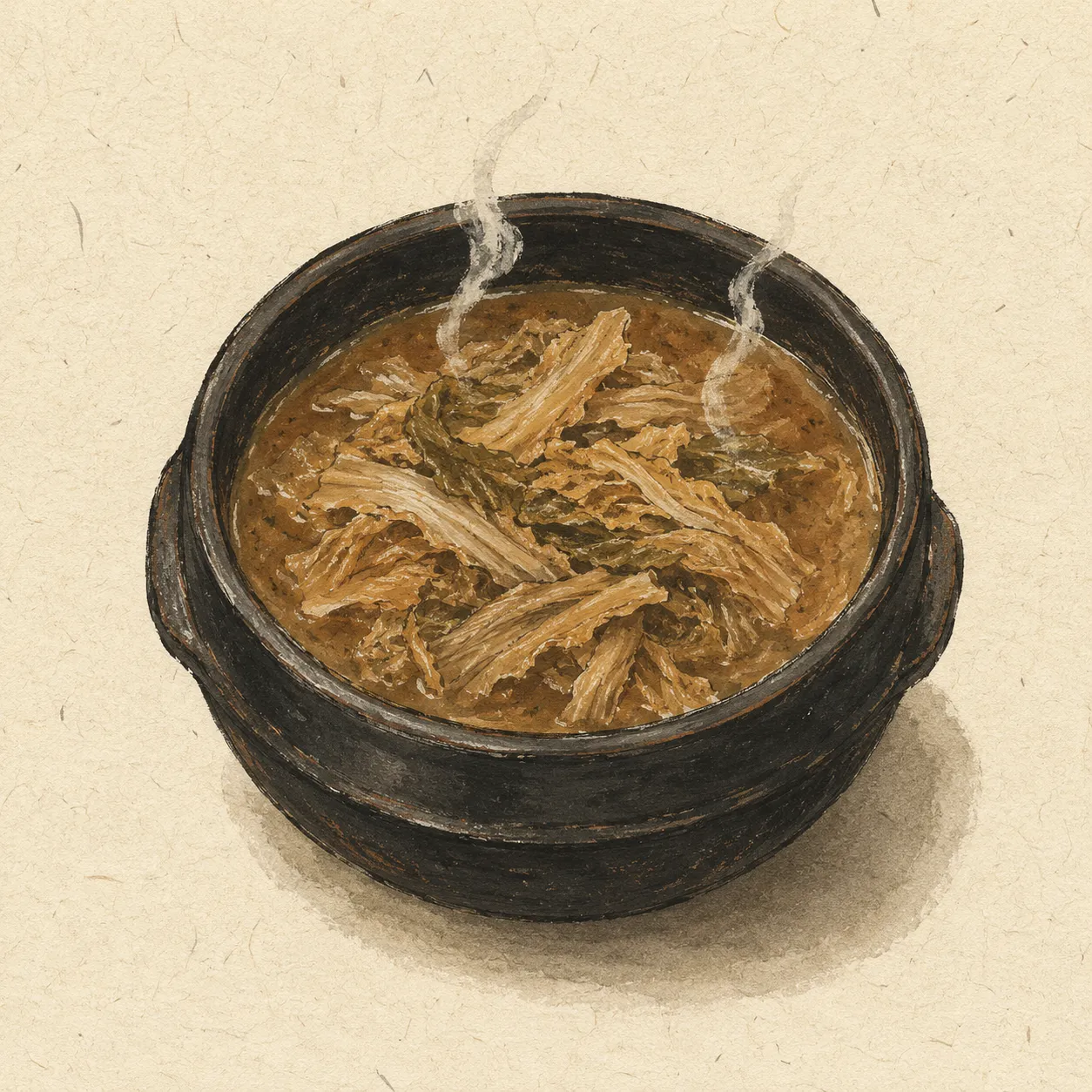
To a Korean, naming the region a gukbap comes from is itself information. “Busan dwaeji-gukbap” carries a working-class, industrial, no-nonsense connotation. “Jeonju kongnamul-gukbap” sits adjacent to refined regional cuisine. Seolleongtang is associated with old-money Seoul and family occasions. None of this is written down anywhere. Koreans just know.
The condiment ritual
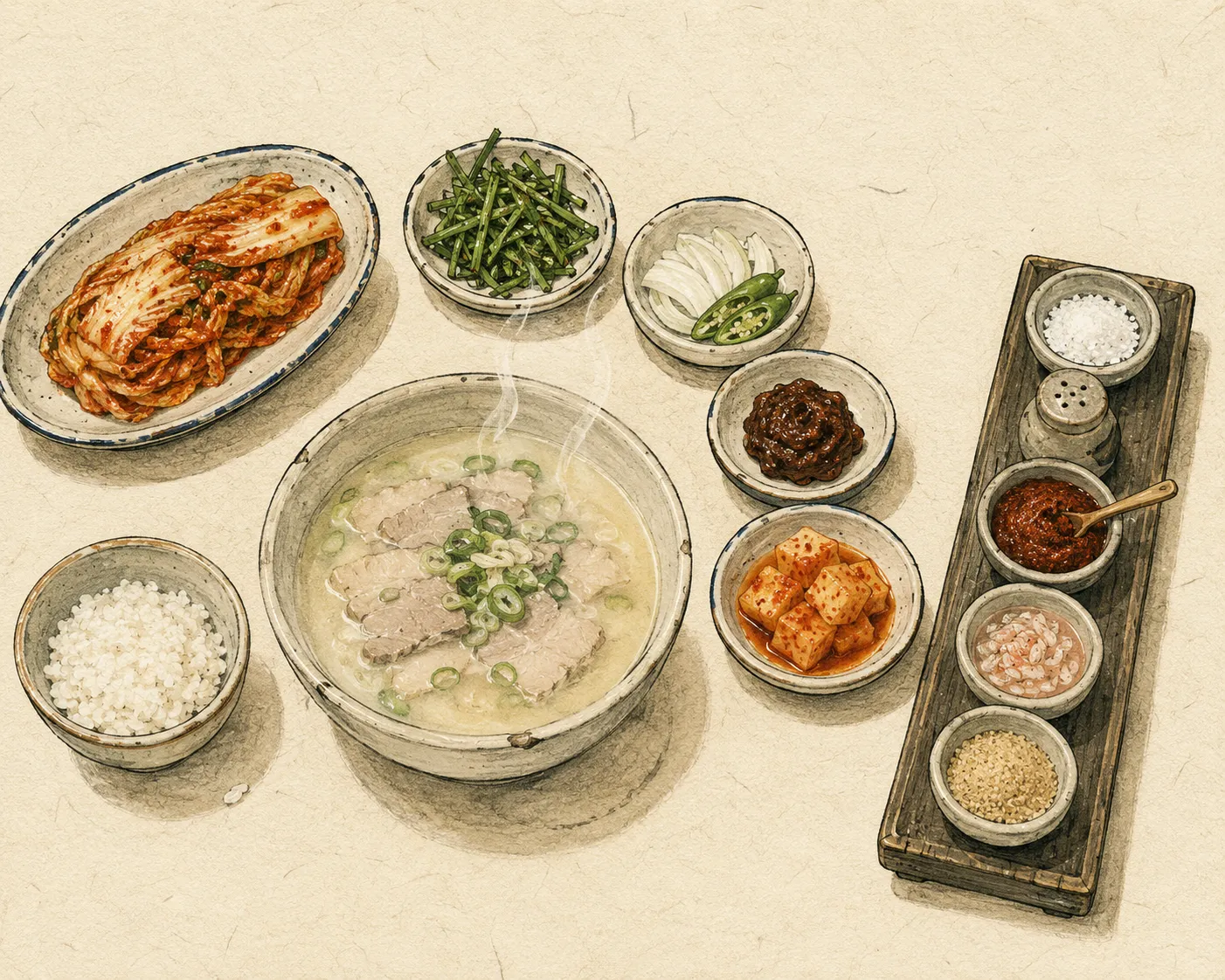
Your bowl arrives plain — broth, rice, meat. It is intentionally under-seasoned. Seasoning is your job. The little tray on the right holds the materials, top to bottom:
- 소금 (salt) — the neutral option. A clean savory lift and nothing else.
- 후추 — black pepper. Generous. Almost always.
- 다대기 — a red paste of chili, garlic, and fermented spices. A spoonful, stirred in, transforms the bowl from beige to red.
- 새우젓 — salted fermented baby shrimp. Salinity with a little funk; a small spoonful is enough. Favored for milky broths like seolleongtang and gomtang.
- 들깨가루 — toasted perilla seed powder. Nutty, thickening. Adds body and a slight bitterness that cuts the fat.
The banchan, by contrast, barely shows up. A gukbap table doesn’t ask for much on the side — 배추김치 (napa cabbage kimchi) and 깍두기 (cubed radish kimchi) , and that’s most of the supporting cast. But the short lineup is exactly why it carries weight: with nowhere to hide, the kimchi quietly does much of the work of deciding whether a place is any good. The gukbap houses with permanent queues are, more often than not, the ones whose kimchi and kkakdugi would be worth the trip on their own.
Make it your bowl
Most cuisines have their internal arguments. In Korea, the most famous one is 탕수육 (sweet and sour pork) : do you pour the sauce over the pork, or dip the pork into a separate bowl of sauce? The two camps have names — 부먹 (sauce on) and 찍먹 (dip) — and Koreans will be polled, weddings will get tense, marriages have probably ended over less.
Gukbap has its own version, just less marketed. Among the moves regular eaters argue about:
- Salt or saeujeot? Some prefer plain salt for a clean savory note; others insist saeujeot is the only correct salinity for milky bone broths like seolleongtang and gomtang.
- Dadaegi early, or halfway through? Stir it in first and the whole bowl becomes one flavor. Hold it until you’re halfway through and you get two distinct chapters — clear broth first, spicy broth second.
- Kkakdugi juice — yes or no? This is where the room divides hardest. Some pour it in for tang; some find it sacrilege. Strictly your own call — which is why Koreans reserve a special eye-roll for the guy who, in the name of teaching you “the right way to eat gukbap,” ladles it into your bowl unasked. He’s enough of a type that he’s basically a meme.
Becoming part of K-culture, in the small sense, is mostly this: you stop eating the way the menu suggests and start eating the way you prefer. Pick a side. Develop a method. Defend it.
My way (one of many):
- Toss the 부추 (Korean chives) that comes on the side directly into the soup. The bite of fresh chive against the heavy broth — small upgrade, big return.
- Season with saeujeot instead of salt.
- Hold the dadaegi until halfway through. The first half is the broth as the kitchen made it; the second half is your version.
- Skip the kkakdugi juice. (I know.)
There are people who would arrange these four moves in completely different orders and be just as right.